


Bad weather in Vietnam could cause coffee headaches

Dire weather in areas of South East Asia has had a negative impact on the production of Vietnamese coffee beans an official said last week.
Vietnam is the world’s largest exporter of robusta beans – the variety of bean that is predominantly used in instant coffee.
There has been a cold snap that, combined with a period of drought, has seen the crop harvested for the 2013-14 period tumble by around 8% when compared to figures available for the 2012-13 season.
…continue reading Bad weather in Vietnam could cause coffee headaches
Canny selling techniques in Vietnam

There is some interesting strategies happening at the moment in the Vietnamese coffee industry.
It’s always nice to learn a little bit about other markets and how they operate to make the most of fluctuating prices.
So what was the story which attracted our attention?
…continue reading Canny selling techniques in Vietnam
Sai Mao cafe in Vietnam coffee with a difference

The Sai Mao cafe is a little different from ordinary cafes.
Usually, one is attracted to a cafe for a decent cup of coffee or other beverage and perhaps a little something to eat.
However, in the Sao Mai cafe, while of course there are refreshments to be consumed, this is not what the cafe is famed for.
Sound unusual? Perhaps.
…continue reading Sai Mao cafe in Vietnam coffee with a difference
Vietnamese baristas to compete in national competition

Making a decent cup of coffee is not simply about boiling the kettle and pouring some hot water over some ground coffee. No siree. The baristas of this world have turned the art of coffee making into a veritable art form. Latte art, signature drinks and technical know-how all go to raise the bar higher than ever. And in Vietnam, the best of the best will be competing to become the champion of the Vietnam Barista Competition later in the month.
What do the participants have to do? They have to make four sets of three categories of coffee drinks, namely espressos and cappuccinos and their own special brew. And they have no longer than a quarter of an hour to complete each drink.
And the prize? Money and the prestige of representing his or her country in the Asia Barista Championship 2012 which is to take place in Singapore, on an expenses-paid trip.
Did you realise that Vietnam is the world’s second largest coffee producer? The first is Brazil. Given the investment in encouraging the local coffee production, the country can hardly be said to be sitting on its laurels either. As well as being a major exporter of coffee, the Vietnamese love to consume the stuff internally too. They are true coffee fanatics.
The competition this month is to take place at the Ho Chi Minh City and will attract many industry experts from all around the world.
Hong Kong television broadcasts Vietnamese coffee

The coffee culture is now a world-wide phenomenon. Every day, we can read about the introduction of the coffee bean to different parts of the globe. In Hong Kong, this trend is being presented on television in a 12 part series by Television Broadcasts Limited. So what are the programme-makers aiming to capture in their films? Named the ‘aroma of coffee,’ the programmes seek to show the coffee culture in famous locations around the globe.
The first episode looked at the Kenyan, Taiwanese, American and Danish coffee markets. Now it is the turn of Vietnam. It can be a surprise for people to learn that Vietnam is the second largest coffee-exporting country (the largest is Brazil) and last year, the country exported some one million tons of coffee.
…continue reading Hong Kong television broadcasts Vietnamese coffee
Vietnam Proves an Instant Coffee Attraction

Following a number of major investments in the production of instant coffee, the Vietnamese coffee industry appears to have been suitably stirred up, according to a local newspaper.
Earlier in September 2010, a CCL Products Group affiliate and one of India’s largest coffee processing businesses, Ngon Coffee Company Limited, started the development of its new plant in the province of Dak Dak, situated within the country’s Central Highland region. The move marks the province’s first foreign investments in the area’s instant coffee processing and is expected to source all raw materials locally. The project is valued at US$18 million and is expected to cover 24 hectares of land once complete.
The company’s new factory, which will reportedly have the capacity of churning out 10,000 tonnes of quality instant coffee, is expected to be up and running in July 2011, generating revenues of a predicted US$27 million during its first year and increase this figure to US$40.5 million by 2014, according to the plant’s general director, Challa Srishant.
Meanwhile Alan Kaisar, director of the US National Coffee Association’s External Relations and Communications, revealed that a number of key industry operators in the US have demonstrated interest in Vietnamese coffee and to enter the market in the future.
In terms of other investments to date, in April this year Singaporean firm Olam International, an international supply chain player in the agricultural arena, opened its US$50 million soluble coffee processing facility in the province of Long An. Initially expected to produce 4,000 tonnes per year, output was predicted to double by 2012, with an additional investment of US$20 million.
Coffee output in Vietnam on the rise
Vietnam, the world’s second largest producer, looks set to see a 7 per cent rise in output in the coming year, according to a US Department of Agriculture unit.
As a result of improved weather conditions, production will increase to 18.7 million 60 kilogramme sacks, considerably higher than the estimated 17.5 million this year, the USDA’s Foreign Agricultural Service said in its latest report.
Last year’s production levels had been poor due to heavy rainfall in Vietnam. This new prediction comes despite the country experiencing its worst drought in over a century, although the report from US Department of Agriculture staff in Hanoi said that “fortunately [it had] not caused a substantial effect on coffee production”
Vietnamese growers are reporting that most coffee trees are bearing good levels of fruit and the development of the cherries is healthy for this point in the growing season.
Vietnam’s coffee plantations cover over 530,000 hectares with officials now believing that only around 2,500 of those will be affected by damage as a result of drought.
The US Department of Agriculture also used this opportunity to voice its concerns over government-backed stockpiling in the country.
“According to contacts from the Vietnamese coffee industry, this stockpiling plan will be implemented slowly because as of yet there are no detailed guidelines… on how to implement the scheme,” the report said.
However, because the country contributes around 15% of global coffee production, many industry experts can see the potential for Vietnamese government plans to influence global coffee prices by controlling supply through stockpiling.
Vietnam to hold it’s own coffee
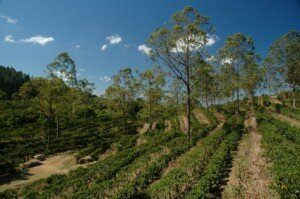
The Vietnamese government is stock piling 200,000 tons of coffee in a bid to drive up its coffee prices.
The price of Vietnamese coffee plunged 25% earlier this year to $1.20 per ton compared with 2009 prices.
Vietnam is the second largest coffee exporter after Brazil, exporting around 1 million tons per year.
This means the government will be holding back around a 5th of all coffee production in an effort to drive up prices and with it profit.
The price drop has arisen from over production in 2009 leaving an estimated 600,000 tons of coffee being unsold.
Yoma aim to boost coffee production in Burma with a large scale investment

A Singapore-listed company has laid out plans that could revolutionise coffee production in Burma, Irrawaddy report.
Yoma Strategic Holdings Ltd. aim to develop what it says could be the largest plantation in the south-east Asian country which it is hoped could transform the currently tepid coffee industry.
…continue reading Yoma aim to boost coffee production in Burma with a large scale investment
Robust-a Coffee Beans

Robusta coffee beans are on the up.
For the fourth consecutive day in London’s stock exchange, the biggest gain in almost two years. …continue reading Robust-a Coffee Beans