


Kenyan Coffee Farm Gains International Recognition for Quality

Awarded the highly sought after UTZ “good inside” certification, Catholic Archdiocese of Nyeri-owned Nyeri Hill Farm has been internationally recognised for the quality of is coffee output.
UTZ Certified is amongst the world’s most significant coffee certification schemes, which recognise positive farming practices and sustainability produced coffee products, as well as social and environmental responsibility that meets consumer standards.
Accepting the certification, Most Rev Peter Kairo, the Nyeri Archbishop, described it as a “cherished goal and a dream true” to be active in the niche speciality market and fully appreciated the recognition for the farm’s endeavours to ensure sustainable agriculture, the wellbeing of its employees and the traceability of its products.
George Karugu Macharia, African representative for UTZ Certified, elaborated that the certification now means that the coffee grown by Nyeri Hill Farm has secured a niche in the UTZ Certified, world-renowned, sustainability-assured and quality speciality sector.
Also present at the award presentation was Coffee Management Services Ltd’s Kamau Kuria who spoke of the already positive impact the certification was having on the farm’s coffee prices. He was also encouraged by the recognition of those farms adopting sustainable and good agricultural practices and urged more coffee farms to focus on bettering the quality of their coffee to reap the same rewards in terms of pricing and recognition.
Nyeri Hill Farm was established in the 1920s and covers 344 hectares of ground across three ridges joined by woodland and corridors of natural vegetation.
Coffee with an Added Kick

For those customers find that their daily cup of coffee just does not hit the spot, a New York, US-based bar called Randolph at Broome is offering a coffee menu with a difference.
Starting as early as 8am, the bar serves hot and cold coffee cocktails. Priced at around £8 apiece, the drinks include: World’s Best Dad, featuring Laird’s Applejack and sweet vermouth; Slow Trip to New Orleans, with Bulleit bourbon, Plymouth sloe gin and coffee; Incoming Tide, which is based on Cognac and Cherry Heering; cold Double Punch, with grape- and cherry-derived Pisco and maraschino liqueur respectively.
Alchemy Consulting, which assisted the company in the compilation of its coffee cocktail programme, said that finding the right spirits to complement the taste of coffee was not a simple process. Alcoholic beverages that were too “complex” overpowered the coffee, whereas those with a fruit base, like coffee, worked best.
On the whole, the average coffee to cocktail ratio is two to one, although the hot coffee drinks are less alcohol intense. And for those who do not want quite such a kick-start to their day, Randolph at Broome also serves regular, ground to order coffees, but not espressos or cappuccinos. Each cup of coffee is slow-dripped with bespoke pour-over solutions for a unique experience. If the aforementioned options are not enough, the bar also offers what it calls “augmented coffees”, which feature spices, nuts and other flavourings, including salt as an alternative to sweeter options.
In terms of style, the bar mimics a 1960s Greenwich Village coffee house, in line with its American bartender as opposed to Italian barista tradition.
One Cup of Coffee Reportedly Safe in Pregnancy

Photo by Jay Erickson
According to a review of two previous studies by the American College of Obstetricians and Gynaecologists, expectant mothers can relax with their daily cup of coffee in the reassurance that this level of caffeine is unlikely to have any detrimental effect.
Researchers claim that 200mg of caffeine, which equates to two cups of instant coffee or one cup of the filtered variety, has no impact on the chance of miscarriage or preterm birth.
This claim is based on the further review of two earlier investigations that looked at the effects of drinking coffee across 1,000 pregnant women. One piece of research found that there was no increased likelihood of spontaneous abortion for women with low, moderate or high caffeine consumption at different stages of gestation, whereas the other investigation highlighted a greater risk of miscarriage in women consuming more than 200mg of caffeine on a daily basis, but no additional risk at lower consumption levels.
Previously, expectant mothers were encouraged not to consume coffee at all through fears of an increased risk of miscarriage and of low birth weight, however the latest findings suggest that one cup of coffee should not have any adverse effect. As Dr William Barth, chairman of the American College of Obstetricians and Gynaecologists committee on Obstetric Practice, has been quoted as saying, “I think it’s time to comfortably say that it’s OK to have a cup of coffee during pregnancy.”
This aside, scientists still warn that pregnant women should not exceed two cups of coffee per day, since the risks of spontaneous abortion or premature delivery are higher above this level.
Wales Soars to Pole Position in Supermarket Spending on Coffee

In the sixth month period to July 2010, Welsh consumers spent 22% more on instant coffee in supermarkets than their counterparts in London.
Based upon data released by mySupermarket.co.uk, which tracks sales through Tesco, Asda, Sainsbury’s and Ocado, the average Welsh family spends almost £50 each year to fuel its increasing love of coffee. This is 10% more than in the north-east of the country, which is ranked second where the purchase of coffee is concerned. Furthermore, for every £1 that is spent on tea, double this amount is reportedly spent on coffee.
Amongst the suggested reasons for Wales’ significant interest in coffee are increasingly sophisticated palates, engendered by the growing abundance of coffee shops, on the one hand, but also a reluctance to persevere with coffee equipment (as opposed to opting for instant coffee based upon price) on the other.
The fact that Londoners are the lowest ranked purchasers of instant coffee in supermarkets is linked to the overwhelming choice of coffee shops, the fact that busy commuters most likely opt for a coffee on the way in to work rather than at home, in addition to the numerous coffee outlets offering Wi-Fi and other such services.
According to the same data, Londoners are said to be increasingly discerning in the coffee that they buy from supermarkets, spending six times as much as the Welsh on fresh varieties, despite being at the lowest end of the scale in terms of overall supermarket coffee expenditure.
Coffee Looks Outside the Cup

As the coffee culture reaches unprecedented highs across the globe, beverage manufacturers are becoming increasingly innovative in their use of consumers’ favourite commodity, as indeed are manufacturers from other industry sectors that have used coffee to boost the appeal of other products.
Coffee-flavoured beers, syrups, liqueurs and various confectioneries, such as coffee-flavoured or coffee, chocolate covered coffee beans or coffee chews, are more and more commonplace as the growing love for coffee boils up around the world. In Ethiopia, far removed from the more likely links with the ingredient, a coffee-flavoured condom was introduced to encourage safer sex and is reported to have been a real success, despite reservations amongst some locals who felt the association devalued the drink.
Meanwhile in the US, a new confectionery product, KA-POW!, takes the more natural link between coffee and chocolate to the next level by excluding the chocolate element entirely, with the resulting offering having the same visual appeal, the same melting ability and the same crispness as chocolate, but with the rich flavour and energy impact of coffee caffeine.
Also in the US, a roasting company is promoting coffee husks for use in tea. Sold as qishr, which is more commonly used as goat feed or fertiliser, these husks – reportedly tasting of fig and date – have also been brewed in tea in Yemen and Ethiopia for centuries with the addition of ginger and other spices.
Coffee caffeine has also been used as an ingredient in sports drinks, blended with teas, used in functional beverages to promote weight loss, with numerous other potential applications yet to have been tapped.
Baristas To Throw Competition Aside

Co-sponsored by wholesale speciality coffee roasting company Stockton Graham & Co, also a beverage supplier, North Carolina, US’ Beyu Café has communicated news of its impending first Latte Art Throwdown.
A contest designed for local coffee outlet staff, the event is to take place on 11 August and will see industry professionals in direct competition with one another to create winning designs on the top of a latte. Normally taking the form of intricate heart shapes or flower-like rosetta swirls, the pattern creations will be judged and winners decided upon and presented with prizes. Recreational as well as experienced latte artists are all encouraged to enter the competition.
Meanwhile elsewhere in the world of lattes, there is a new coffee experience in Warsaw, Indiana, USA, in the form of a coffee shop called Latte Art. The baristas serving at the coffee establishment have all learned their trade at The Coffee Institute, a Muncie, Indiana, training school.
Latte Art specialises in espresso-based creations, but also offers real fruit smoothies, interesting teas and traditional hand-mixed soda drinks, therefore catering to all tastes from the sophisticated palate of a discerning adult consumer through to the child looking for a fruit-flavoured drink. “From lavender or lemongrass flavours to strawberry and banana, we have something for everyone,” said barista Brenda Stichter.
The owners of the new coffee outlet, the Stichter family, have conducted business in the Warsaw area for around 40 years, however previously in the fields of masonry and spa pools, with this latest venture representing a significant change in direction.
Contactless Payment Makes Coffee Quick to Go

Some elements of the UK coffee industry are beginning to adopt a new payment system which does not require any contact or physical exchange of money.
Using technology supplied by global credit card and loan provider Barclaycard, the payment method will allow customers to pay for purchases of up to £15 in value without the need for pin numbers of signatures. As with Oyster card systems at London underground stations, all individuals are required to do before leaving with their coffee is hold their card above the terminal and rely on the technology to record the transaction.
The system can reduce counter waiting times and thus increase throughput, particularly in high traffic locations. Higher throughput should, of course, result in higher revenues for outlets adopting this technology.
Meanwhile The Co-operative Food group has announced plans to start a pilot contactless technology scheme in 100 of its outlets in 2011, with Barclaycard also supplying such systems to other operators in the food retail sector, including Pret a Manger, Subway, Yo! Sushi and EAT. For The Co-op, which will be the UK’s first major food retailer roll out contactless payment, the next step will be to expand the facility to the majority of its stores by the 2012 Olympics. Mark Hale, who directs the group’s food information systems, commented on the benefits, “This technology will mean increased customer choice and faster transaction speed, which will vastly improve the customer experience.”
It is also reasonable to assume that other innovative contactless systems using mobile phone technology will be seen on the nation’s high streets in the not too distant future.
Bathing in the Benefits of Coffee

Portland, US-based cosmetics company Barista Bath and Body has announced the launch of what it claims is the first such complete bath and body care range to incorporate antioxidant-rich coffee and coffee extracts.
Whilst there have been various products introduced to the market that have been designed to harness the anti-ageing effects of coffee, this is reportedly the first occasion where an entire coffee-based beautifying product portfolio has been unveiled. Similarly, Barista Bath and Body is “the first company to use actual ground coffee, brewed coffee, coffee seed oils and coffee extracts in [its] products,” according to CEO Christine Willett.
The company sources and grinds organic, fair-trade coffee itself, brewing it to use in its shampoo, conditioner, shower gel and soap and grinding it to achieve exfoliating properties for its scrubs and soaps. Meanwhile coffee seed oil features as another ingredient in its conditioner, with coffee in its extract form going into the soap and lip balm in the range.
In order that its customers can reap the full potential benefits of the coffee ingredients, Barista Bath and Body brews the commodity to specific pH levels of between 4.5 and 5.5, as this is apparently the optimum range for the active properties.
Not only is the pioneering company seeking to offer a complete bath and skincare range, its launch is also aimed at tapping into the burgeoning demand for natural products. In this regard, the Barista line is said to be the first coffee-based range of its kind to be free of parabens, sulphates and phthalates.
Second Cup As Good As the First? It’s All in the Sequencing

According to Robert M Richman, a retired chemistry professor who published his recipe in periodical Complex Systems back in 2001, there is apparently a mathematically stronger way of pouring a second cup of coffee.
The precise methodolgy, which is based upon recursive binary sequencing, shows filter coffee enthusiasts how to overcome variations in coffee strength from the top of the pot to the bottom, the coffee poured first being weaker than that at the bottom of pot as a result of having passed through the filter last.
“Swirling the pot does not homogenise the coffee, but using the proper pouring pattern does,” according to Richman. Here is his advice: prepare two cups’ worth of coffee in a cafetiere; take two mugs, A and B; then pour four equally-sized volumes in the sequence ABBA, with both cups of coffee being almost exactly the same in terms of taste.
In order to reduce any potential variation still further, Richman suggest pouring eight equal volumes into mugs A and B in the optimal sequence: ABBABAAB, which represents one sequence out of a possible 35 at this stage. Richman’s endeavours to achieve absolutely identical results across the first and second cup do not stop there, with the ideal sequence achieved when splitting the coffee distribution into 16 pours being ABBABAABBAABABBA – now one out of a potential 6,435 sequencing options.
Such blending problems occur in various other areas of modern life, according to Richman, such as ensuring the even distribution of pigments when mixing paint and indeed in selecting sides for two-team sports.
Tighten Your Belt Thanks to Svelte
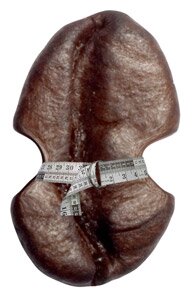
An Australian-based provider of natural remedies with a 60 year history, Bloom’s, has unveiled what it suggests is a ground-breaking new natural weight loss proposition.
Called Svelte GBC 45, the natural medicine supplier’s new ingredient derives its metabolism-boosting properties from its green coffee bean extract, Cholorogenic acid, which is sourced specifically from decaffeinated beans.
Positioned as a convenient and healthy way in which to lose weight without the need for caffeine, weight loss tablets, drastic detox diets or shakes, the pioneering ingredient performs its function by supporting glucose metabolism, or in other words reducing the absorption of sugar from food and triggering the body to use the energy from stored fat cells instead, which in turn lowers body mass index (BMI).
Studies involving the consumption of Svelte GCB 45 over a 60 day period showed the following results: a 6 per cent reduction in both weight and BMI, as well as a reduction in hunger.
Available through all key pharmacies and health food stores in the US, the revolutionary weight loss aid is said to cost just $1 per day, with consumer testimonials claiming to have witnessed results after two months’ usage.
In other green coffee related news, Indonesia – which is the world’s third largest producer of coffee and fourth most important grower of green coffee – has been highlighted for its international certification in the production of organic coffee. Grown mainly (90 per cent) by smallholders on farms, 19 of the country’s farmers’ cooperatives and exporters are certified to market coffee of the organic variety.