


Multi-purpose Coffee Tables Bring Entertainment Value

The new Millennium Table is positioned as the ideal piece of furniture for those who are fans of both coffee and arcade gaming.
The new millennium-inspired creation is equipped with an integral arcade machine with 60 classic games, including the age-old favourites Space Invaders, Asteroids and Pac-Man. For those that might be likely to spill their coffee in the gaming excitement, they can rest assured that any such spillages will not cause any damage to the arcade machine, as it is securely encased by a see-through glass exterior. For those that want to share the entertainment value that their coffee table brings, the unit also comes equipped with an additional controller.
The Millennium Table is not a cheap solution at US$3,010 apiece through Benjamins, so a DIY compromise could be a better alternative for those with more compromised budgets.
And in the UK, furniture, lighting and industrial product designer, WertelOberfell Platform, introduced its Clover coffee table at the end of 2010. Made out of a single sheet of corian, the unique design explores three dimensional forms from the material by machine shaping the surface of the table and bending the legs out from this through the use of high temperatures. The resulting creation is an organic structure, capable of holding up a piece of glass with three dimensional lines.
WertelOberfell Platform was established in 2007 by Jan Wertel and Gernot Oberfell, who followed Industrial Design at Stuttgart’s State Academy of Arts. Companies the design business has worked with include Sony, MGX, Yamagiwa and Iker.
Espresso Machine Coffee Judged Delicious

A new espresso maker, Judge Espresso, has been introduced by UK-based Horwood. Needing just a few minutes to produce great-tasting coffee to suit all palates, the latest device uses either ground coffee or pods.
The Judge-branded espresso machine is also equipped with two handles, one that is used for 44mm instant coffee pods and the other for coffee that has been freshly ground. Its water container is detachable for ease of refilling and cleaning. And to create the perfect cappuccino, the machine also boasts an integral variable steam wand to create the ideal frothy milk. Topping off the espresso maker is a self-cleaning water chamber, with the device also supplied with a pair of Italianesque espresso cups.
Adding yet another coffee machine to the increasing number designed with the domestic environment in mind, Horwood’s latest creation is said to allow consumers to achieve coffee shop style coffee in the comfort of their own home.
The introduction of the Judge Espresso maker to Horwood’s product portfolio represents somewhat of a departure from the norm, in terms of its existing selection of kitchen equipment, which primarily comprises cutlery, bakeware, steamers and saucepans, knives and marble accessories, such as pestles and mortars, cheeseboards and chopping boards.
Entirely black-grey, simple in design and compact in size, the company’s new Judge Espresso could prove an interesting and popular addition to its offerings. Reported to also be good value for money, its manufacturer is currently looking for interested stockists for the unit.
Tettenhall Coffee House Lures Customers with Latte Art
Sadliers Coffee Lounge in Tettenhall, is a prize-winning coffee venue run by barista Paul Sadlier, who has been perfecting his latte art for a number of years and has now mastered the art of crafting various shapes on his coffee creations.
Since opening just five years ago, Sadliers has been named the country’s top coffee venue by the Beverage Service Association on two occasions.
Commenting on the increasing importance of latte art in giving coffee outlets their point of differentiation over competitors, Sadlier said, “If you can produce latte art on a coffee it shows you are taking it seriously and want to give the best to the customer.”
However, perfecting latte art takes considerable time and practice to perfect the technique, with the temperature and texture of the milk of critical importance in the whole process resulting in success. But the effort is worth it, according to Sadlier, since visitors to his outlet are always bowled over by his artwork and cannot believe how he can achieve such coffee design finery, despite witnessing him in action in front of their very eyes.
The coffee house opened in 2005 and has since grown to become a huge success. Having recently moved from its previous location in an arcade in the area, Sadlier’s feeling is that the new, larger venue on Tettenhall’s Upper Green will allow the business to leverage further opportunity from the local coffee industry. Taking its loyal customer base to its new premises, Sadlier’s has also secured success in both regional and national competitions and been recognised as a provider of quality food and beverages.
Tea and Coffee Importer Spiced up through Acquisition

Based in Dorset and delivering tea to the UK market since 1934, tea and coffee importer Keith Spicer has been purchased by Harris Tea, a business arm of US tea manufacturer, Harris Freeman, alongside Jay Tea, which forms part of Madhu Jayanti, an Indian tea exporter.
Vice chairman of Harris Freeman, Gilbert Zaris, commented on being pleased to welcome the Dorset tea and coffee importer to its business, adding: “Through this acquisition we have gained a complementary business while giving us a stronger foothold in Europe.” Helping the Harris firm to further enhance its position as a leading supplier of own label teas, it is hoped that this latest move will also benefit possible additional acquisitions in the area in the future.
Harris Freeman, which is said to also have other business interests, has production plants in California, Georgia and New Jersey and has a network of distribution outlets across the country. Thanks to its Jay Tea division, Madhu Jayanti is currently the largest supplier of own label tea from India, with distribution in Europe and Russia as well as Africa and Australia.
In terms of the coffee element of the Keith Spicers business, the Spicers FoodService section of the company prides itself on its strong tea blending and coffee roasting expertise and its ability to offer total beverage solutions. In terms of the type of coffee it uses, this is sourced from the world’s best growers, with tastes to cater for every palate, from the smooth consistency of 100 per cent Arabica blends, to the dark-roasted Italian offerings that are ideal for espresso drinks.
Hot Beverage Packaging Clipped and Coiffured

Clipper Teas, the UK-based manufacturer of a comprehensive portfolio of Fairtrade and organic hot beverages, has recently launched its newly re-designed coffee and hot chocolate packaging – a new look for the New Year.
In 2009, the company also re-vamped its full range of teas with hand drawn images designed to portray a clear, simple message, that its beverages are entirely unprocessed and completely natural offerings, where taste is the primary consideration.
With the backing of a London design agency, Big Fish, the tea and other hot beverage specialist hoped to carry on the same theme and brand message that has been so well accepted among consumers since the last rebranding exercise. Commenting on the latest plans, Clipper’s Marketing Director, Gill Hesketh, said, “With our packaging we aim to emulate the product inside the box, unprocessed, natural, hand made and carefully considered with a clear conscience.” This, Hesketh said, is echoed across the firm’s entire portfolio of hot chocolate, coffee and tea products.
Hesketh also highlighted the fine balance between needing to keep consistency on the one hand but also creating an entirely new look on the other.
Both the company’s cocoa and coffee come from various parts of the world, from Central America and South America to Papua New Guinea. All products, in their entirely natural capacity, are free from all artificial ingredients, with Clipper having always chosen its own suppliers and blended, tasted and honed its own products, to maintain the level of quality that its customers have come to expect.
Coffee Machine Gets Integrated

The manufacturer behind the Dutch kitchen appliance name ATAG has communicated news of its latest launch, a built-in, fully integrated coffee machine which it is calling CaféMax.
Said to deliver the perfect coffee at every press of the button, the new kitchen comfort is available in either graphite black or stainless steel in terms of finish and is designed to complement ATAG’s existing Max range of kitchen appliances, to create a stylish, designer look.
The machine has been developed with a cappuccino milk container that functions automatically, thereby helping to keep the CaféMax device cleaner for longer, bringing time efficiencies in terms of maintenance. Not only does this function reduce cleaning requirements, by using exactly the right volume of milk every time and therefore preventing it from overflowing. This aspect of the machine also reduces wastage. Furthermore, the milk container can be easily removed and kept in the fridge to ensure freshness.
When it does come to cleaning, ATAG’s CaféMax creation has automatic alerts that signal when the machine needs cleaning, when its waste bin should be emptied and when the water reservoir needs to be topped up. And for added convenience and flexibility, the machine will happily produce its coffee from either ground coffee or beans.
Other key highlights of the machine include a user-friendly display and buttons for efficient programming, the ability to adjust the height of the coffee spout for different sized coffee cups, front access, a water reservoir capacity of 1.8 litres, as well as filters that are easily cleaned.
Airline Pilot Cries Out over Spilt Coffee

Spilling his coffee on his aircraft’s radio equipment, a United Airline pilot accidentally triggered an alarm signalling the plane was being hijacked, which caused the Chicago to Frankfurt, Germany plane to make an unexpected stop in Canada.
According to Transport Canada information, United Flight 940 was re-routed to the Canadian capital of Toronto in the late hours of Monday and touched down safely at the city’s Pearson International Airport. The coffee spill, which caused interference with the aircraft’s communications equipment, caused distress signals to be released, one of which was code 7500, indicating unlawful interference or hijacking. It is thought that the pilot’s exclamation upon spilling his coffee was incorrectly interpreted as this alarm code due to the muffled effect the liquid caused to the equipment.
Transport Canada’s report said that the country’s defense department was alerted to the potential security risk, but that with the assistance of the airline’s dispatch staff, the crew on board the aircraft were able to confirm that the problem was due to a breakdown in communication technology and not a hijacking.
In other coffee and airline news, US-based Java City Inc, a subsidiary of Irish coffee and tea expert, Bewleys, has been supplying American Airlines passengers, both domestic and international, with its sustainably-sourced speciality coffee since the start of November 2010. The blend offered on board is derived from the Arabica variety of bean, which is medium roasted and has a nutty flavour with a subtle smoky undertones.
Industry and Personal Awards and Rewards

US-based Lasaters Coffee & Tea has, for the fifth consecutive year since its first award in 2006, recently been the proud recipient of the 2010 Speciality Coffee Association of America’s most prestigious accolade, the Golden Cup Award.
This is presented to select coffee businesses “for their commitment to quality and proven ability to brew coffee,” both aspects being in line with the coffee association’s prescribed standards.
Lasasters Coffee & Tea has a comprehensive portfolio in terms of its coffee blends, offering dark roasts, espresso, flavoured coffee and medium roasts. These blends use coffee sourced from a variety of different locations, from Alaska, Brazil and Columbia to Ethiopia, Guatemala and Mexico. In addition to its coffee, the company also sells merchandise such as espresso and ceramic mugs, tumblers and French press coffee jugs.
Meanwhile in other coffee news, Dunkin’ Donuts has joined the Rhode Island Blood Center in its National Blood Donor Month, sponsoring the initiative and giving all donators a pound of coffee for their pint of blood donated, as part of the ‘Give a Pint, Get a Pound’ programme.
For the whole month of January, those donating blood through Dunkin’ Donuts on Reservoir Avenue, Cranston, will be rewarded with a pound of weight of Dunkin’ Donuts coffee as an extra incentive to get them supporting the fantastic effort during the quieter months of the year. National Blood Donor Month was started back in January 1970 for this very reason of boosting donations during the winter months.
Digital ‘Weigh’ to Measure Coffee in Kenya
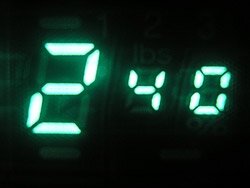
Following a long-standing period of the manual weighing of coffee, which brought with it the problem of so-called ‘ghost kilogrammes,’ where farmers asked recorders to manipulate the system in exchange for cash, this process will now turn digital in a number of Kenyan factories, in a bid to increase efficiency and farmers’ earnings.
The industry is hopeful that by embracing such new technology, the country’s coffee sector will quash the previous mismanagement and become more transparent – and revived as a result.
Part of the reason that the ‘ghost kilogramme’ came about was due to the common understanding that the manual system underestimated the weight of a crop by this amount, with farmers therefore not sufficiently rewarded financially, unless an adjustment was made. A recorder for the Kikima Cooperative Society, Mr Paul Muema, commented on the ‘down-measurement.’ “We do not recognise less than a kilo as this is assumed to compensate for the sack used to carry the beans.”
Not only will the new digital technology wipe out the need for any manipulations, it will also make sure that farmers are paid accurately for their coffee, eliminate the requirement for paper and also reduce the waiting time for farmers wanting a receipt.
The new system is to be implemented in six factories across the country – carried out by the Kenya Coffee Producers Association. Support will also be provided by Ufadhili Trust, under the CoopWorks Project, in its efforts to improve efficiency across the sector as well as facilitating record keeping for cooperatives.
Strong Jump in Indian Coffee Exports for 2010
India’s coffee output is reported to have risen by 56 per cent in 2010, according to data recently revealed by the country’s Coffee Board.
As Asia’s primary exporter of coffee, particularly the Robusta variety, India is said to have exported 2.04 lakh tonnes of coffee in the fiscal 2009-10 period, up from 1.96 lakh tonnes during the previous 2008-09 year. On a January to December basis, production in the country is reported to have reached 3.08 lakh tonnes in 2010, compared with 2.89 lakh tonnes in 2009.
Strong domestic production as well as improved pricing on the international market are said to have been the main drivers for the increased performance of Indian coffee exports in 2010. With Italy, Germany and Russia representing the country’s main export markets and together accounting for over 40 per cent of India’s coffee export volume, the Coffee Board has been encouraging exporters to look beyond the usual export areas of America and Japan, to leverage new opportunities a further increase in crop might afford. Other markets already served by Indian coffee exports include Belgium, Spain, Croatia, Slovenia, Jordan and Egypt.
While normal coffee exports alone registered growth of an impressive 62.5 per cent to 2.47 lakh tonnes in 2010, compared to the previous year’s volume, re-exports of coffee also fared well, rising by almost 30 per cent to 45,430 tonnes in 2010. In value terms and as revealed by the Coffee Board, Indian coffee exports reached Rs 3,022 crore during the year, up from the Rs 2,005 crore registered in 2009.