


Coffee drinking benefits

Coffee, you have to agree, is now a worldwide phenomenon and the global population drinks a substantial amount of the product. Even some countries that were strongly associated with other beverages (‘I wouldn’t do that for all the tea in China’) have been changing their allegiances somewhat of late. It is hardly surprising that there have been many research projects into the properties of coffee and how it affects our body. Recently, there have been spates of news articles to show that coffee may be something of a good thing.
For instance, Robert J. Davis, has written a book called ‘Coffee is Good for You’ and discusses the various health benefits. For instance, it is said that there are high levels of antioxidants in coffee. He also notes the large research projects over the past years to draw some of his conclusion.
Another reviewer of coffee studies is, apparently, a cardiologist called James O’Keefe. He has been quoted in the press as claiming coffee is one of the most prevalent ‘pharmacologically active beverages’ on the planet. There are arguments that coffee increases metabolism, can reduce the risk of Type 2 diabetes, Alzheimer’s and Parkinson’s diseases. In addition, there have also been studies which suggest it lowers blood sugar levels.
Of course, the research continues and scientists are refining and investigating the various claims and study results, but it is encouraging to think that there may be other benefits (than the delicious taste that is) of supping on your cup of joe.
Business women of Camden network over coffee

It has long been a man’s domain in the world of business but the fairer sex are becoming more and more prominent. Nonetheless, it is always important to remember the business skills of networking with their fellow ladies and sharing experiences, expertise and know-how. And now, in this current climate especially, youngsters need help in learning about the world of business and getting their foot in the door.
One scheme has been set up to help to address some of these issues. As reported in the local news, Camden Apprentices is a scheme that works with local employers and also the young generation in the area, to help them undertake apprenticeships, which include giving support to employers during this period.
The new initiative from the scheme is to host a set of monthly coffee clubs for business women. The idea is that these ladies will be able to create relationships with other likeminded professionals and potentially new business colleagues. The format of the coffee morning involves a different ‘host’ giving a short talk to introduce her to the gathering. The business women will also be encouraged to discuss whether they would like support in their businesses.
The first event is on Thursday 16 February and it is free to attendees, although registration is compulsory.
It is encouraging that a partnership between potential apprentices is bound up into this scheme. In the current economic climate, the younger generation need all the help they can get.
Coffee dramas on ScotRail

People, it would appear, have strong views on coffee. Especially on long journeys. How many of us like to savour the taste of a decent cup of coffee as we listen to the rhythm of the train on the tracks, watching the world go by and unwinding a little? It seems that the answer is ‘quite a few,’ because when ScotRail made the decision to reduce the size of their coffee cups, several news stories were posted online rather quickly in response.
Why has the train operator made this move? Apparently, beverages such as tea and coffee so popular on the trains that they cannot keep up with demand. The ScotRail team have come up with the solution of providing more cups, but in a smaller size. According to reports, although the new size cups are going to be two thirds of the size of the old ones, only 10 pence is to be cut from their price tag.
However, more people will be able to enjoy their cup of joe. In some ways this is good news: coffee is loved by many and is in demand! Online news articles have quoted Richard Ardern, from Friends of the Far North Line, who argues that the new cup is still ‘reasonably sized’ at 8oz, although he has reservations at the new price.
The ScotRail services use coffee and hot water flasks to dispense the beverages to passengers on their services. The train operator has services which run from Edinburgh and Glasgow to Aberdeen and Inverness. There are also routes which run along to the West Highlands and also Caithness.
Photo: EdinburghGreens
Irish coffee – its past and celebrations of its present

According to reports, this is how the tradition of Irish coffee started… Irish coffee is a cocktail that was invented in the 1940s by a bartender in Shannon Airport in Ireland. The bartender’s name was Joe Sheridan and, when he was serving drinks for some Americans on a particularly cold winter night, he wanted to spice up his customers’ coffee to give it an extra kick. He chose to put a little whiskey into the drink and when asked what the new drink was, he christened his creation as an Irish coffee.
So how did the reputation of the drink spread? One of those who sampled the drink at the airport happened to be a travel writer from the west of America. When he returned to his home, San Francisco, he was so taken with the beverage that he persuaded local bartenders to use the recipe and he also wrote about it in his magazine.
Of course, the drink went down a storm and spread all over the country. It is now a popular drink which is supped by many and is a firm favourite.
Perhaps it passed you by, but did you realise that 25 January was designated as the National Irish Coffee Day? Coffee seems to be an ingredient which is close to many people’s hearts. There are coffee festivals and coffee conventions – and now there has been a National Irish Coffee Day too. Don’t worry if you missed the Coffee Day – you can still make yourself an Irish Coffee.
Photo: jules:stonesoup
What to do with coffee morning spoils?

Chard Carnival had a dilemma – what should they spend the funds that they raised at the local carnival last year on? A nice dilemma, no? But a dilemma, nonetheless. The carnival had raised £2,700 which needed distributing.
The solution? A recent coffee morning was held in the Baptist Church so that the funds could be allocated to the chosen causes and charities.
Have you noticed the relationship between networking, socialising and coffee-drinking? The first coffee shops were dubbed ‘penny universities’ and many a business meeting or social gathering involves a cup of joe. Similarly, there is a relationship between coffee and charities – isn’t the coffee morning one of the most popular ways of fund-raising that we have?
So a coffee morning was chosen for the allocation of the Chard Carnival funds. Who benefitted? £250 was donated to St John’s Ambulance, £100 was allocated to the Avishayes School, for replacement toys at the Early Years centre (many were damaged by recent vandalism). £100 was also given to the North Petherton Carnival Committee (whose own event was cancelled because of a crash on the motorway the night before the event), £250 was spent on Christmas lights for the town, but the main beneficiary was the St Margaret’s Hospice, which received £2,000.
This hospice is said to be the fourth largest in the country and needs £6.5 million annually to keep going. According to reports, the vast majority of income for the charity (83% has been quoted in the press) is used for patient care.
Two ideas for making use of coffee grounds…
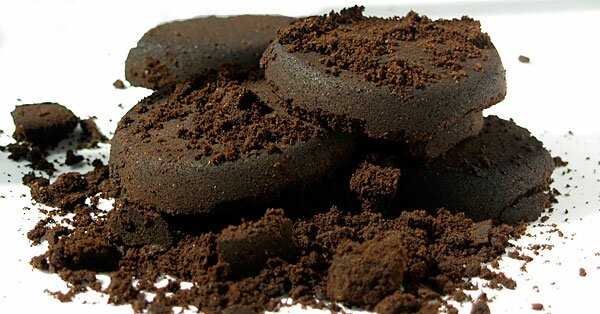
Of course, you could simply throw your coffee grounds in the bin, but some of you may be creative, environmentally aware, or open to different ideas. If so, read on… First idea: use it to touch up scratched furniture. Some clever minded soul has posted this suggestion online with a view to helping us to improve the quality of battered wooden furniture. How does this suggestion work? The idea is to use coffee grounds to cover up the scratches by colouring the wood to a similar shade as the rest of the furniture – as such, this coffee-ground-tip only really works on medium or dark stained furniture.
How to do it? Dip a cotton wool bud into some old coffee grounds and paste it over the scratches in the furniture. Wipe away around ten minutes later. And (hopefully) hey presto!
Second idea: use the coffee grounds to make some mulch for your soil. The better quality the soil, the better chance plants have at keeping their roots nice and healthy.
How to do it? Aerate the soil first, but turning over the earth. Once this has been done initially, you can let the earthworms take over this process in subsequent years. Next it’s time to add the compost – and this is where the coffee grounds come in. Of course, you can buy good organic compost, but did you realise that you can also scatter coffee grounds on your beds? About an inch will do. Finally, add mulch.
Photo: Coffee Machines
Uganda is going great guns with its exported coffee
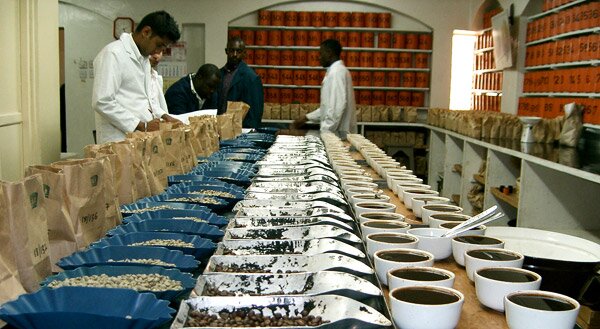
Africa seems to have a special relationship with coffee – rumour has it that coffee was discovered there and in these modern times, many of the countries in the continent contribute greatly to the world coffee market. Kenya, Uganda, Ethiopia… there are many African nations which produce coffee. …continue reading Uganda is going great guns with its exported coffee
Is beer and coffee a good mix?

Many of us will have tried coffee liqueur, perhaps. And the majority of us will have supped on coffee. But there is another form of mixing the caffeine elixir with alcohol that has been in the news recently. Coffee beer. Tickle your fancy?
In the Sacromento news, there have been reports about a coffee India pale ale which is being introduced to the market. According to the Rubicon Brewing Company, which has joined forces with Old Soul Co, for the purposes of this beverage, they have tried mixing beer and coffee before but they have opted for a darker form of beer. However, after a little bit of experimenting, they were pleasantly pleased with the effects of using a paler ale for the purposes of the mixture.
It seems that the punters are enjoying the new drink too. Again, according to reports, after the first month on sale, this coffee-beer has been received well. Apparently, the bitterness of the alcoholic ingredient marries nicely with the roast of the coffee ingredient.
Reports say that there is a sort of sensory ‘trick’ when drinking the new beverage. What you see and smell do not necessarily tally with the expected taste of the drink when you take a sip.
What sort of coffee is used in this recipe? Apparently Ethiopian coffee is used – in particular, one called Belova, which has been described as a rare reserve variety. Sounds interesting no?
London Coffee Festival set for another year

Last year, London put its coffee credentials to the test by staging its own Coffee Festival. Long acknowledged as a social hub and also as a centre for coffee-lovers, the reception of the 2011 festival was very strong. So strong, in fact, that the event is to be repeated this year. A good year for London no? The Jubilee, the Olympics and the Coffee Festival too.
In 2011, according to reports, there were some 7,500 ‘coffee people’ who came together, whether as lovers of the caffeine elixir, foodies, baristas or other players in the coffee industry. You may have heard that London has been described as being in the middle of the ‘third wave’ coffee scene. Over a three day period, visitors enjoyed sampling and learning more about coffee.
This year, the festival is back. The dates for the event are 27-29 April. There are to be various ‘zones’ to the festival. For instance, pop into the Hyde Park area and see some coffee roasting (at the aptly named Roaster), or if you fancy something a little off the beaten coffee track, have a look at the Tea Garden or the Chocolate Factory. Soho is another ‘zone’ filled with coffee shops and barista skill-showcasing. The Showroom is the place for coffee geeks to check out the coffee machines and gadgets, whereas the Shoreditch zone is foodie heaven, filled with artisan food stalls. For those who want to learn about coffee production, visit the Growing Community, while the Lab is filled with demonstrations and workshops for a more hands-on approach.
Take your pick!
Fancy your chances as an award-winning barista?

Did you know that each year, there is a competition which unites many of the coffee-loving countries of the world? In it, the best of the best baristas in each nation battle it out for the title for the World Barista Champion.
Things are hotting up and plans for the national heats are underway, so if you think that you offer great barista services to the world, now is your chance to be acknowledged for your craft.
So, what’s the deal? If you want to strut your stuff, you would need to attend one of the local competitions. Within a period of a quarter of an hour, you will set up your working space and then you have another fifteen minutes to make some coffee to blow the socks off the judges. Not just any random cups, mind you. You need to make four cups of cappuccinos, four cups of espresso and then four cups of your signature drink (based on an espresso). Sound easy to you? Then perhaps you ought to apply.
The judges will then cast an eye and sip on your coffee to see what they think of them. The scoring is out 840 and if your coffee hits the spot and you make it into the top twenty scores, you will be a semi finalist at the London Coffee Festival. From then on, if you impress at the semi finals, you may just win yourself a place in the finals on 29 April.