


Healthy Coffee company expands
Have you heard about the Healthy Coffee company?
It is based in California and it has an unusual approach to coffee making.
The ingredients are, perhaps, not what you might expect for a coffee company.
Ginseng and Reishi are used in their beverages and the company claims on its website that this creates ‘the most powerful Healthy Coffee in the world.’
…continue reading Healthy Coffee company expands
Green coffee and losing weight
The beauty industry is endlessly trying to help us to shed pounds: secret ingredients to cellulite busting creams, diets that involve specific ingredients, food combinations or limited food groups and endless tips and suggestions to help to stave off cravings or boost the metabolic rate.
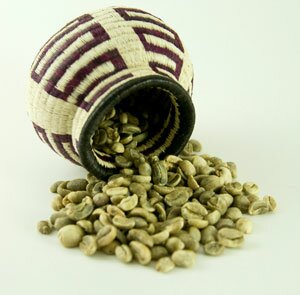
However, did you realise that a rather humble, much-loved food ingredient may also help to keep weight down? According to reports in the OTC Pharmaceutical Business Review, there is a new product on the market that makes use of this ingredient. Naturex, which is a botanical manufacturer from France, has apparently made an announcement that its product, called Svetol, is useful to lose weight. And the ingredient which the company holds responsible for this weight loss? Green coffee bean extract.
So how does that work then? The reports indicate that this product prevents glucose being absorbed in the intestine which in turn cuts down the sugar levels in the blood. The result of all this is that the body makes use of stored fat to provide energy.
The reports have also referred to a placebo experiment which involved 50 participants aged between 19 and 75 years of age and who were overweight. Over a 60 day period, the placebo group lost 2.9% of weight, whereas the group using the Svetol product had an average weight loss of 5.7%.
According to a spokesperson, the Svetol product approaches weight loss in a different way from more conventional weight loss tablets, which tend to work on suppressing appetite.
The best way to make your coffee as healthy as it can be

With a wide range of health benefits increasingly attributed to coffee, it is worth briefly reviewing the best way in which to make coffee in order to ensure that it is as healthy as possible. The following are some of the key steps in making coffee at home:-
1. For the freshest coffee possible, grind whole beans immediately before brewing.
2. Ensure uniform size by grinding coffee in one chamber until the grinds are small enough to flow through a variable-sized mesh into another container.
3. Use a ceramic kettle.
4. Filter the Water. Distilled water is far better than water from the tap.
5. Using a French Press enables the coffee to be mixed directly with boiling water, ensuring the best brewing process.
6. Choose evaporated cane to sweeten your drink. The best sweetener is raw sugar.
7. Buying organic cream is arguably the biggest key to get the purest of coffees. It also offsets the bitterness of black coffee.
8. Use real silverware as a silver spoon is naturally antibacterial. Silver mechanically purifies water without breeding “super” bugs.
9. As with wine, it is essential in drinking coffee that you use a suitably sized coffee cup to enjoy the full flavour. The radius of the cup determines the parts of the tongue that hit the liquid first.
Clearly not all of us will have access to, for example, a ceramic kettle, but the more of these guidelines you are able to follow, the greater the enjoyment and associated health benefits should be.
Coffee enemas – the perfect detox!

The father of modern medicine, Hippocrates, first prescribed the traditional enema some 2,600 years ago. They were also given mention by Patanjali, the first author on yoga around 200 B.C. “In fact, there is hardly a region of the world where people did not discover or adapt the enema. It is more ubiquitous than the wheel. Enemas are found in world literature from Aristophanes to Shakespeare, Gulliver Travels to Peyton Place”. (Ralph W. Moss, PhD)
It is commonly accepted that the coffee enema originated during WW1 when field nurses discovered that they could be used as pain relief for the wounded. It has since been proven to help the liver remove and dump toxins that cause inflammation and discomfort by irritating the nervous system.
The palmitates contained in the drink increase the action of glutathione-S-transferase by 600% to 700% in the liver and small intestine. It is this enzyme that is responsible for the detoxification as well as helping to inhibit the re-absorption of poisonous fluids.
It is even possible for those who are sensitive to caffeine to make the most of the procedure by using a mixture of half coffee and half chamomile. However, people with ulcerative colitis and/or a history of high blood pressure should not use coffee enemas at all. It is certainly recommended that you do your research and consult your GP before having the procedure.
Be sure to use non-flavoured, organic coffee and remember to consume plenty of fluids after a coffee enema to stop dehydration and electrolyte imbalance.
Further study adds weight to coffee benefits for diabetics

A new study conducted in Germany has revealed that drinking coffee can greatly reduce inflammation and increase HDL cholesterol levels – which may help to stave off type 2 diabetes.
The study, to be published in the American Journal of Clinical Nutrition, enlisted 47 regular coffee drinkers who were prepared to give up the drink for one month. After this month of abstention all traces of coffee had been completely removed and the research was undertaken.
Participants were then told to consume four cups of coffee every day for one month and then eight a day during the following month.
The blood of the participants was then analysed using a number of methods including gas chromatography, mass spectrometry, bead-based multiplex technology and enzyme-linked immunosorbent assay.
Speaking about the results, Christian Herder of the Leibniz Center for Diabetes Research at Heinrich Heine University Düsseldorf said “Coffee consumption appears to have beneficial effects on subclinical inflammation and HDL cholesterol, whereas no changes in glucose metabolism were found in our study… Furthermore, many coffee-derived methylxanthines and caffeic acid metabolites appear to be useful as biomarkers of coffee intake”.
This study thus adds further weight to the existing evidence that coffee drinking is beneficial to health. However, the results should be viewed in the context that the study was sponsored by the Institute of Scientific Information on Coffee, which is a consortium of the largest coffee firms across Europe. That said, the German ministries of Health and Innovation, Science, Research and Technology were also involved in funding it.
Coffee can help to protect you from skin cancer

A recent study in America has revealed that by drinking up to six cups of coffee a day, you can significantly reduce your chances of developing certain types of skin cancers.
Coffee has been known to provide positive health benefits for some time now, from drinking a mere single cup a day to up to four. Past studies have shown it to reduce the risk of strokes, high blood pressure, Alzheimer’s and Parkinson’s disease. However, researchers at Wayne State University in Michigan believe that skin cancer can now be added to that list after performing tests on 90,000 women.
Their research showed that of the women who drank no coffee at all, 10% were found to develop the common cancer, basal cell carcinoma. However, for those women who consumed six cups of coffee a day, this figure was reduced to 6.7%, an overall reduction of 31%.
The same test was also carried out with decaffeinated coffee which did not result in a notable reduction in the development of the cancer. It is for this reason that scientists believe that the resulting reduction could be ascribed to caffeine’s effects as an anti-oxidant helping to shield skin cells from the disease.
If this study proves to be conclusive then coffee really can be considered a ‘super drink’, particularly with other recent research suggesting that a blend will soon be found which can halt the production of stomach acids usually attributed to the drink, which some find results in mild discomfort.