


Coffee Workers Turning to Construction

“For every three workers we need, we have two,” states Juan David Rendon.
Rendon, the head of the Andes Coffee Cooperative, oversees the work of a number of coffee farms and plantations; combined, the cooperative own about 86,000 acres of arable land that is used for coffee farming.
But despite tackle adverse weather patterns and fluctuating market prices, the biggest battle he, his coffee farmers and his colleagues elsewhere in the country face is an absence of staff.
…continue reading Coffee Workers Turning to Construction
NAEB moves to reassure the Rwandan coffee industry as global prices tumble

The National Agriculture Export Development Board of Rwanda (NAEB) has taken steps to install confidence in the country’s coffee industry that an increase in crop quality will help protect farmers and exporters against the current – and expected – drop in prices on the global markets.
As we have noted previously on World Coffee Press, favourable weather conditions in key geographical areas has seen worldwide harvest levels rise, which has resulted in more supply than demand. As such, prices have tumbled.
…continue reading NAEB moves to reassure the Rwandan coffee industry as global prices tumble
Indonesia expecting a bumper coffee harvest

If you like your Indonesian coffees then we expect you to be doing cartwheels and bouncing off walls at the news that farmers in the country are predicting a bumper crop this season thanks to some recent wet weather.
The archipelago nation is one of the world’s biggest producers of coffee and produces everything from cheap and resilient Robusta through to some exceptionally fine Arabicas that command top dollar at market.
Estimates published in The Jakarta Globe put this year’s haul at a potential 650,000 metric tons, a rise of 18% from the 550,000 tons that was collected last year. If true, this would represent the largest harvest the country has seen, surpassing the record 630,000 ton crop of 2009-10 and 2012-13.
…continue reading Indonesia expecting a bumper coffee harvest
NAEB announces a new plan for Rwandan coffee

Speaking at a one day event centred upon the Rwandan coffee sector, George William Kayonga, the Chief Executive Officer for the National Agricultural Export Board (NAEB), announced plans for a new government back initiative that will, hopefully, improve both productivity and quality of the cash crop.
This new policy aims to redress a number of issues which has plagued the country’s coffee industry in recent years, making everything more streamlined and efficient in the process.
…continue reading NAEB announces a new plan for Rwandan coffee
Can we keep up with demand?

There may have been a dip in coffee prices last week on the ICE Futures Exchange when some fears about the Brazilian climate were alleviated, but that hasn’t stopped some people within the industry to issue new words of warning: “The world cannot afford to keep looking only at Brazil,” said Roberio Silva, the executive director of the International Coffee Organization (ICO).
Speaking earlier this month, James Cordier of the Liberty Trading Group attempted to dispel the prospect of Brazil, the world’s largest coffee producing country, suffering from successive prolonged and potentially damaging dry spells.
…continue reading Can we keep up with demand?
Scheme set up to help women coffee growers in Rwanda

Congratulations are in order for over 800 Rwandan women who have recently completed a twelve-month course devoted to learning about modern and viable coffee growing practices.
The programme, run by a non-government supported entity Sustainable Harvest Rwanda, is hoping to break down gender barriers, inequalities and other roadblocks that often stand in the way of women being fully recompensed for their work.
…continue reading Scheme set up to help women coffee growers in Rwanda
Kenyan Government plans to “revitalise the coffee sector”
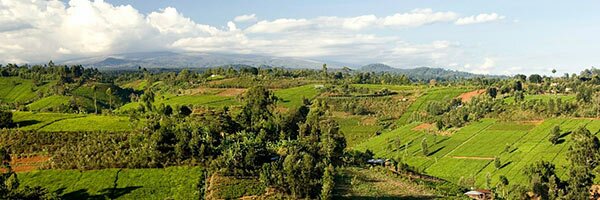
According to reports that are doing the rounds, a new, ambitious plan has been laid out by the Kenyan government.
A senior official, speaking earlier this week, has stated that there is a movement to see the African country produce double the amount of coffee it does now, increasing output from 50,000 tonnes per annum to 100,000.
…continue reading Kenyan Government plans to “revitalise the coffee sector”
Sharp decline in Uganda’s coffee exports

Coffees is Uganda’s leading export commodity, but, unfortunately for the African nation, the amount grown, harvest and sold to foreign markets has been in decline over the course of the past twelve months.
Experts who oversee the industry have, recently, come out and stated the obvious: this isn’t a good situation.
The latest report that has been released by the Uganda Coffee Development Authority (UCDA) indicates that for the year between December 2013 and December 2014, the country exported some 3.5 million bags with a value of $430 million.
…continue reading Sharp decline in Uganda’s coffee exports
Colombiam coffee set to reach ‘pre-rust’ levels
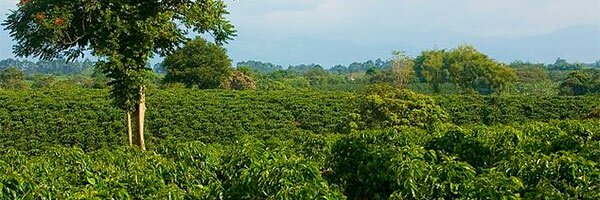
“It’s been our great leap forward,” beamed Luiz Samper, a marketing director at the Colombian Coffee Growers Federation (FNC).
Samper is referring to the latest set of figures which suggest that the amount of high quality Arabica coffee that is grown in Colombia is set to rise and reach ‘pre-crisis’ levels in the not too distant future. Even better, forecasters are predicting further growth over the next couple of years.
…continue reading Colombiam coffee set to reach ‘pre-rust’ levels
Government raises concern about the Kenyan coffee industry
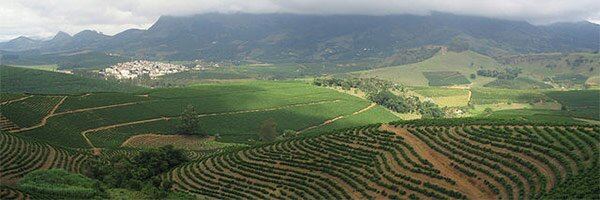
Reports emanating out of Kenya suggest that the national government has expressed cautious concerns that the country may lose their privileged position in the world’s coffee market because production levels are predicted to drop.
Currently, Kenya is producing in the region of 50,000 tonnes (metric) per year – a sharp decline from the nation’s peak of 130,000 tonnes which was achieved in the late 1980s.
…continue reading Government raises concern about the Kenyan coffee industry